
Train Times in Japan: How Long It Takes to Get Around and Other Tips
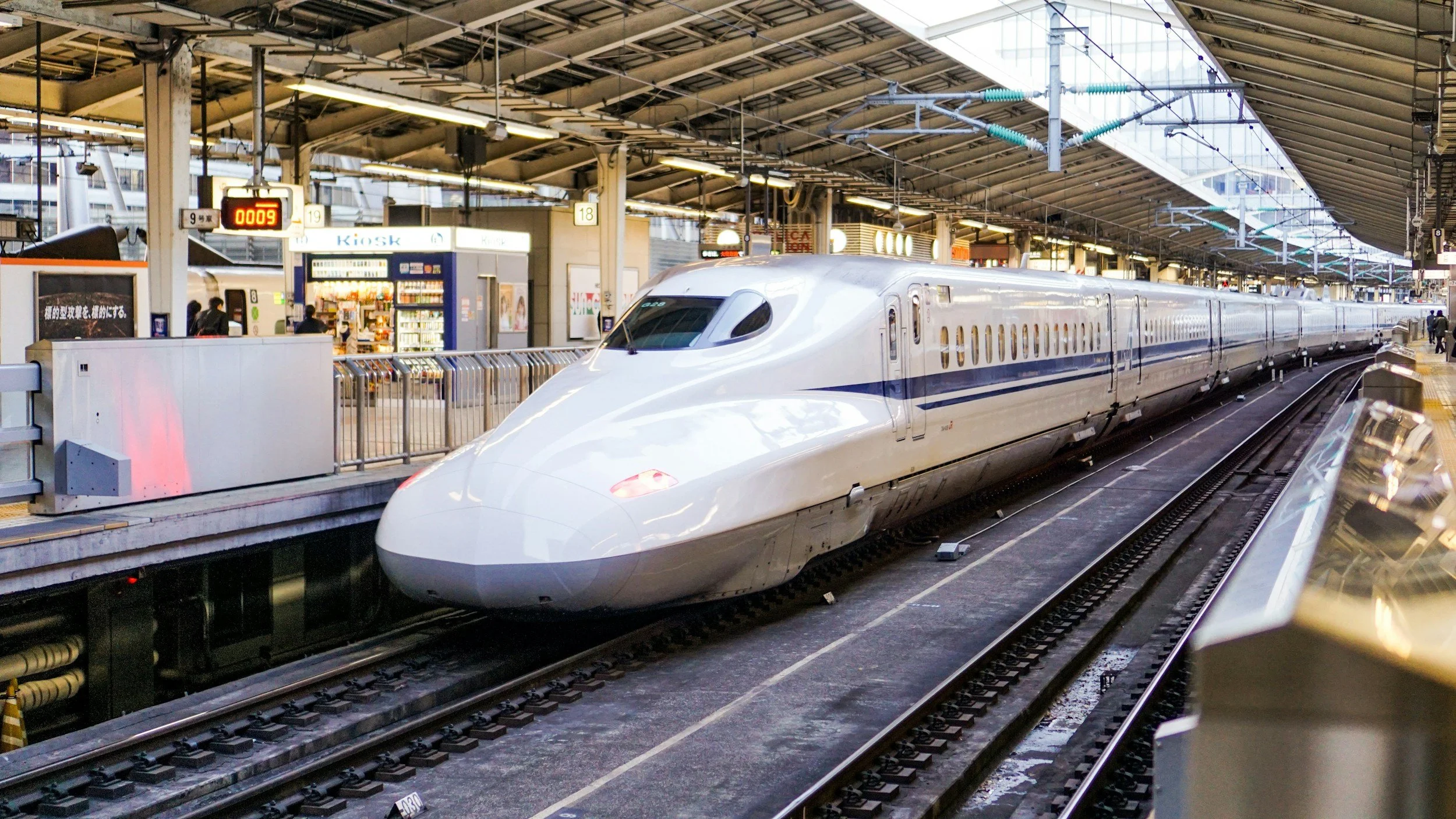
Japan's train system is one of the great pleasures of travel — impossibly punctual, remarkably comfortable, and scenic in ways you don't expect. But it also has a learning curve. Tickets work differently than anywhere else in the world, luggage rules are strict, and getting it wrong can mean a ¥1,000 fine or missing your train. This guide covers everything you need to know before you go — from the best ticketing apps to the unspoken rules of riding in silence. Ready to talk Japan? Book a complimentary vacation consultation here.
Suica: The Card That Does Everything
Before anything else, you should set up a Suica card. It's a rechargeable IC (transit) card that works on virtually every subway, bus, train, taxi, and convenience store purchase across Japan. Think of it as a contactless payment card that also happens to unlock every transit gate in the country.
The best setup: iPhone users can add a digital Suica directly to Apple Wallet before they even leave home — no need to find a machine at the airport. Once it's in Wallet, they can tap to pay everywhere: trains, convenience stores, vending machines, taxis, even some hotels and restaurants. Android users can get a physical Suica card at any JR station or airport.
One card does most things. Suica alone handles all local trains, subways, and buses in every major Japanese city. It's only for Shinkansen (bullet train) travel that you need something extra.
Smart EX: Booking the Shinkansen
For travel on the Tokaido, Sanyo, and Kyushu Shinkansen lines — the main corridor covering Tokyo, Nagoya, Kyoto, Osaka, Hiroshima, and Fukuoka — Smart EX is the easiest way to book bullet train tickets in advance.
Smart EX is a free app and website where you can:
Reserve seats on the Shinkansen in English before leaving home
Link your reservation to your Suica card so you just tap your phone at the gate — no paper ticket needed
Change reservations as many times as you want before departure (for free)
Filter for seats with oversized luggage space (more on that below)
How to set it up: Register at smart-ex.jp with any major credit card (Visa, Mastercard, Amex, Discover all work). Add your Suica card ID in the app settings. When you book a trip, "designate" the ticket to your Suica card — from that point, you board by tapping your phone, exactly like a local train.
Important limitation: Smart EX only covers lines running west from Tokyo (toward Kyoto/Osaka/Hiroshima). For lines running north or northwest — to Kanazawa, Sendai, or Hokkaido — use JR-EAST Train Reservation (ekinet.jreast.co.jp) instead.
Suica vs. Smart EX — when to use which:
| Situation | How to book / pay |
|---|---|
| Subways, local trains, buses | Suica only |
| Convenience stores, taxis, vending machines | Suica only |
| Shinkansen Tokyo → Kyoto / Osaka / Hiroshima | Smart EX (linked to Suica) |
| Shinkansen Tokyo → Kanazawa / Sendai / Hokkaido | JR-EAST Train Reservation |
| Romancecar to Hakone | Odakyu app or station kiosk |
| Mt. Fuji Fuji Excursion train | JR ticket window or online |
One honest note: Some foreign credit cards have trouble registering with Smart EX. If it doesn't work, tickets can always be purchased at JR ticket machines at any major station — there's always an English option. Lines can be long in peak season, so arriving 20 minutes early is wise.
Green Car: Is It Worth It?
The Shinkansen has two main classes: Ordinary (coach) and Green Car (business class, essentially). Here's what the upgrade gets you:
Seating: Green Car is 2×2 across the aisle; Ordinary is 2×3. This is the biggest difference — Green Car gives you a window seat that doesn't share a row-of-three with a stranger.
Space: Seats are wider and have more legroom. Footrests are included.
Atmosphere: Far fewer families with young children, less noise, and generally more business travelers who follow train etiquette closely.
Quieter: Green Car passengers tend to be very quiet. It's an excellent environment for napping or working.
What the Green Car does NOT give you: Extra luggage space. Oversized baggage rules apply to Green Car riders exactly the same as Ordinary Car riders.
Our recommendation: On longer journeys — Tokyo to Kyoto (2+ hours), Tokyo to Hiroshima (4 hours) — the Green Car upgrade is money well spent for travelers who value comfort and quiet. On short hops like Kyoto to Osaka (15 minutes), it's unnecessary.
Luggage: The Rules That Catch People Off Guard
Japan's luggage rules on the Shinkansen are strict and enforced. Here's what to know:
Standard luggage (under 160 cm total, H+W+D combined): Goes in the overhead rack, no reservation needed. Most carry-on suitcases fit here.
Oversized luggage (160–250 cm total): This is roughly any large checked-bag-size suitcase. On the Tokaido, Sanyo, and Kyushu Shinkansen (Tokyo → Osaka/Kyoto/Hiroshima corridor), a seat reservation in the oversized baggage area is required — and it's free of charge if reserved in advance. Without a reservation, there's a ¥1,000 penalty fee and a conductor may move the bag.
The oversized baggage area is behind the last row of seats in each car (last 5 seats in Ordinary, last 4 in Green). The storage space is locked and accessible with your IC card (Suica). You can filter for these seats when booking in Smart EX.
The real solution: luggage forwarding (takkyubin)
This is the single most transformative tip for Japan travel. Japan's takkyubin services — operated by Yamato Transport (look for the black cat logo) — will collect luggage from your hotel and deliver it to your next hotel overnight, typically for ¥1,500–2,500 per bag. It usually arrives the next day.
What this means in practice: travelers can hand their bags to the front desk the night before check out, and walk to Kyoto Station the next morning with a day bag — their suitcases will be waiting at the Kyoto hotel when they check in. It's an extraordinary service. Hotels and convenience stores (7-Eleven, FamilyMart, Lawson) can all arrange it.
Rush hour and local trains: Avoid dragging large suitcases onto local trains during morning (7:30–9:30am) and evening (5:30–8:00pm) rush hours. Trains are genuinely packed and a large rolling bag causes real problems. Forward luggage ahead, or time local train travel outside peak hours.
Train Etiquette: What Every Traveler Should Know
Japan's trains operate under an unspoken code that visitors are expected to follow. Locals will rarely say anything if you break it — but they will absolutely notice.
Phone calls: Do not make or take phone calls on the train. This is one of the firmest social rules in Japanese train culture. If a call comes in, step off at the next station or let it go to voicemail. Texting and using apps silently is fine.
Volume: Speak quietly with travel companions. Solo travelers are typically silent. Loud conversation, even in a foreign language, draws attention.
Headphones: Always use headphones for audio. Speaker audio is not done.
Eating and drinking: On local trains (subways, city rail), eating is generally not done and is considered mildly rude. On long-distance Shinkansen and limited express trains, eating and drinking at your seat is perfectly acceptable and part of the experience — ekiben (station bento boxes) are specifically designed for this.
Seats: Priority seats near train doors (marked in a different color) are reserved for elderly passengers, pregnant women, and people with disabilities. Sit in them only if the car is nearly empty, and give them up immediately if needed.
Boarding: Wait at the marked positions on the platform (yellow lines indicate where the doors will open). Let passengers off before boarding. Never hold the doors.
Food and Drink on the Train
One of the great unsung pleasures of Shinkansen travel in Japan is ekiben — "eki" meaning station, "ben" from bento. These are beautifully packaged boxed meals sold on train platforms and inside stations, and they are exceptional. Every region has its own specialty: wagyu beef bento in Kyoto, seafood bento in coastal cities, grilled salmon in Hokkaido. They're usually between ¥800 and ¥2,000.
The timing: Buy your ekiben before boarding. Major stations have dedicated ekiben shops on the platform or concourse. The selection gets picked over during peak hours, so if you're catching an early Shinkansen, go to the shop when you arrive at the station.
Drinks: Vending machines are everywhere in Japanese stations — hot coffee, cold tea, sports drinks, and beer (yes, really). You can also bring convenience store food on board. Shinkansen dining cars and cart services exist on some trains but not all.
Green Car service: On some Shinkansen services, Green Car attendants come through with a cart offering drinks and light snacks. Don't count on it for a full meal — bring your ekiben.
Train Distances and Durations: The Popular Routes
| From | To | Duration | Train / Notes |
|---|---|---|---|
| Tokyo | Kyoto | ~2 hrs 15 min | Nozomi Shinkansen (fastest; not JR Pass) |
| Tokyo | Kyoto | ~2 hrs 40 min | Hikari Shinkansen (JR Pass) |
| Tokyo | Osaka (Shin-Osaka) | ~2 hrs 30 min | Nozomi Shinkansen |
| Tokyo | Hiroshima | ~4 hrs | Nozomi Shinkansen |
| Tokyo | Hakone (Hakone-Yumoto) | ~80–85 min | Romancecar from Shinjuku (direct) |
| Tokyo | Mt. Fuji (Kawaguchiko) | ~1 hr 55 min | Fuji Excursion Limited Express from Shinjuku |
| Tokyo | Takayama | ~4–4.5 hrs | Shinkansen to Nagoya, transfer to Limited Express Hida |
| Tokyo | Kanazawa | ~2 hrs 30 min | Hokuriku Shinkansen (Kagayaki/Hakutaka) |
| Kyoto | Osaka | ~15 min | Shinkansen; or 30 min on regular JR/Hankyu |
| Kyoto | Hiroshima | ~1 hr 25 min | Nozomi Shinkansen |
| Kyoto | Takayama | ~3 hrs 15 min | Shinkansen to Nagoya, transfer to Limited Express Hida |
| Osaka | Hiroshima | ~1 hr 25 min | Nozomi Shinkansen from Shin-Osaka |
| Osaka | Takayama | ~4–4.5 hrs | Shinkansen to Nagoya, transfer to Limited Express Hida |
| Hakone | Kyoto / Osaka | ~2–2.5 hrs | Shinkansen from Odawara (short local train from Hakone-Yumoto) |
Getting to Mt. Fuji: What You Actually Need to Know
Mt. Fuji is a classic day trip from Tokyo or a stop en route to Hakone — but it requires a separate mindset from the rest of Japan's rail travel.
The gateway: The main base for Fuji views is Kawaguchiko (Lake Kawaguchi), which sits at the foot of the mountain. This is where you should stay or base a day trip.
The best train: The Fuji Excursion Limited Express runs directly from Shinjuku Station in Tokyo to Kawaguchiko Station — no transfers, in about 1 hour 55 minutes. It's modern, comfortable, and has reserved seating. There are only a handful of departures per day, so advance booking is essential. JR Pass holders need to pay a small supplement for the Fujikyu Railway section (around ¥1,770).
Don't be confused by "Mt. Fuji Station": There is a stop called Fujisan Station (also signed as "Mt. Fuji Station") on the Fujikyu Railway line. Despite the name, this is a local station for residents with little tourist infrastructure. The stop you want is Kawaguchiko Station — the end of the line.
From Kawaguchiko to the 5th Station: If climbing or going high on the mountain is the goal, the Fuji Subaru Line 5th Station sits at 2,300 meters altitude and requires a separate bus from Kawaguchiko (about 50 minutes each way). During the climbing season (July–August), a direct bus runs straight from Shinjuku. Outside that window, it's a two-step journey.
Mt. Fuji from the Shinkansen: For travelers who just want a view of Mt. Fuji without committing to a full day trip — the Tokaido Shinkansen passes Mt. Fuji approximately 40–45 minutes after leaving Tokyo. Seat on the right side of the train (D and E seat letters, traveling Tokyo → Kyoto direction). Best visibility on clear mornings in winter. Summer mornings are often cloudy.
Combining with Hakone: The classic route is Tokyo → Hakone (Romancecar) → Mt. Fuji area → Tokyo, done in 2 days. From Hakone, a train or bus connects to Kawaguchiko via Gotemba. Many travelers do Hakone on day one (onsen, Matterhorn-style mountain scenery), Kawaguchiko/Fuji on day two.
Getting to Takayama
Takayama is one of Japan's most rewarding off-the-beaten-path destinations — an Edo-period mountain town with sake breweries, morning markets, and traditional ryokans. Getting there requires a little planning.
Best route from Tokyo: Shinkansen to Nagoya (1 hr 40 min on Nozomi) → Limited Express Hida to Takayama (2 hrs 30 min). Total: about 4–4.5 hours. The Hida is a scenic limited express train that winds through the Japanese Alps on the second leg — the scenery after Nagoya is genuinely beautiful.
From Kyoto/Osaka: Shinkansen to Nagoya (35 min from Kyoto / 50 min from Osaka) → Limited Express Hida to Takayama (2 hrs 30 min). Total: about 3–4 hours.
Note on route disruption: As of early 2026, a section of the Hida line between Takayama and Toyama is out of service due to a damaged bridge (expected to reopen late 2026). The standard Nagoya → Takayama route via the Hida is still running normally — only the northern extension is affected.
The JR Pass covers the full Tokyo → Takayama journey (via Hikari Shinkansen and Hida), making this a particularly good value for pass holders.
A Note on the Japan Rail Pass
The JR Pass gives unlimited travel on almost all JR trains, including most Shinkansen, for a set period (7, 14, or 21 days). It's a significant upfront cost — but for travelers covering Tokyo → Kyoto → Hiroshima → Osaka → Takayama in two weeks, it nearly pays for itself on the Shinkansen fares alone.
Key point: The JR Pass does NOT cover the Nozomi or Mizuho Shinkansen (the fastest services). Pass holders use the Hikari instead, which is typically only 20–30 minutes slower on popular routes — a minor trade-off for the savings.
Book before leaving the US. JR Passes must be purchased outside Japan and are activated at designated JR offices on arrival.
Planning a Japan trip and not sure where to start? Antidote Travel specializes in crafting Japan itineraries that balance the iconic highlights with the quieter discoveries — from first-class Shinkansen seats to the perfect ryokan in the mountains. Reach out to start planning. Book a complimentary vacation consultation here.
About Krista
I’m a Virtuoso travel advisor based in Palm Beach, Florida. I attended the University of Notre Dame for undergrad and I have my MBA from the University of Chicago. Before building my travel business, I spent 20 years in the investment management industry and over a decade living and working in London, England. I’ve personally traveled to 80 countries and now design thoughtful, highly customized trips for travelers who value expertise, access, and a seamless experience.
I offer a complimentary 30-minute consultation for travelers considering a custom itinerary or luxury cruise. Book a complimentary vacation consultation here.
For travel inspiration and real-time updates, you can follow along on Instagram or connect with me on Facebook. I also share a curated list of travel products I genuinely use and recommend in my online store.
What I Offer…
Custom itinerary design for complex, multi-stop trips
VIP hotel benefits through Virtuoso and preferred partner programs (including complimentary breakfast, hotel credits, and priority for upgrades where available)
Luxury ocean, river, and expedition cruises with added onboard credits
Vetted villa rentals with concierge services worldwide
Private guides, small-group touring, and unique local experiences
Private aviation and yacht charters through trusted partners
Airport transfers, VIP arrival and departure services, and full ground logistics
Travel protection and support when plans change
I work best with travelers who want expert planning, trusted partnerships, and someone in their corner from start to finish. That’s what I am best at! Ready to talk travel? Book a complimentary vacation consultation here.